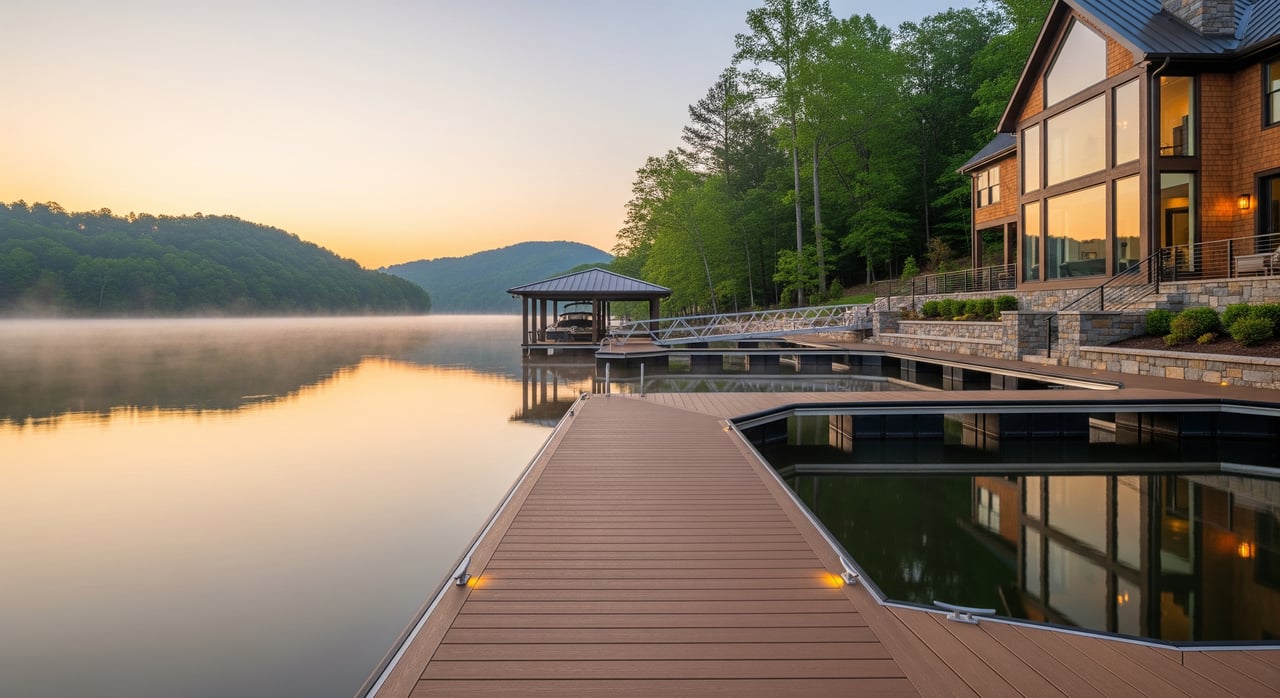
Thinking about adding a dock to your Chickamauga Lake home or buying a property with one? The shoreline is a huge lifestyle win, but the permits can feel confusing if you don’t know where to start. You want a smooth, safe project that stays on schedule and on budget.
This guide walks you through who regulates docks on Chickamauga Lake, when each permit applies, how the process works, timelines, and the most common pitfalls for buyers and sellers in Chattanooga and Hamilton County. You’ll know what to check before you write an offer or hire a contractor. Let’s dive in.
Who regulates Chickamauga Lake docks
Understanding jurisdiction is the first step. For Chickamauga Lake, several agencies may be involved depending on your project scope.
- TVA Shoreline Management Program (SMP). TVA is the primary regulator for docks, boathouses, lifts, and most shoreline uses on Chickamauga Lake. If your work touches TVA-managed land or water up to the reservoir’s full-pool elevation, you start with TVA SMP.
- State of Tennessee (TDEC). If your project alters the waterbody or lakebed, you may need an Aquatic Resource Alteration Permit (ARAP). Common triggers include riprap, seawalls, dredging, and excavation below the ordinary high water line.
- Local building departments. Inside Chattanooga city limits, the City of Chattanooga codes apply. In unincorporated areas, Hamilton County requirements apply. Local permits often cover on-shore construction, grading, erosion control, and electrical work for lifts.
- Federal agencies (less common). The U.S. Army Corps of Engineers and U.S. Fish & Wildlife Service may be involved when projects affect federally regulated navigable waters, wetlands, or protected species. Most routine residential docks are handled by TVA SMP first, and federal involvement is only needed in specific situations.
Bottom line: TVA SMP is your primary starting point. Depending on your scope, TDEC, local building departments, and occasionally federal agencies may also need to sign off.
Which permit you need and when
Most lakefront projects fall into a few categories. Here’s how approvals typically line up:
New private dock
- TVA SMP: Approval for location and design.
- Local permits: Building and electrical, depending on design and wiring.
- TDEC ARAP: Usually not required for a dock that avoids excavation or fill below ordinary high water. Confirm case by case.
Dock replacement or repair
- TVA SMP: Replacement in kind often still needs review. Simple repairs may be maintenance, but check before starting.
- Local/TDEC: Permits if shoreline work, heavy equipment, or electrical is involved.
Boat lifts and mechanical equipment
- TVA SMP: Approval required. Expect rules on size, projection, and safety.
- Local: Electrical/mechanical permits and inspections are common.
Boathouses or enclosed structures
- TVA SMP: Stricter standards than open docks with specific footprint and design limits.
- Local/TDEC/Federal: Additional reviews are likely for larger projects.
Shoreline stabilization
- TVA SMP: Applies whenever the reservoir edge or TVA land is involved.
- TDEC ARAP: Frequently required for riprap, seawalls, or bioengineered solutions that alter state waters.
- Local: Erosion control or grading permits may be needed.
Dredging or excavation below ordinary high water
- TVA SMP: Approval required.
- TDEC ARAP and possibly USACE: Commonly triggered by dredging.
Tip: Property boundaries and the location of the ordinary high water or full-pool line matter. A current survey that shows these lines will save time and help you avoid redesigns.
Step-by-step approval roadmap
A little planning up front goes a long way. Follow this sequence to keep your project moving.
- Confirm basics. Pull your deed, order a boundary survey if you do not have one, and gather any prior dock licenses or permits.
- Talk with TVA SMP early. Share your concept to learn if it fits standard designs or needs full review.
- Prepare a site plan. Include dimensions, distances from property lines and adjacent docks, orientation, and any lift or boathouse details.
- File concurrently. Submit your TVA SMP application and local permits at the same time. Add a TDEC ARAP application if you plan shoreline stabilization or dredging.
- Address comments. Be ready to revise plans to meet agency conditions.
- Get written approvals. Do not begin construction until all permits are issued.
- Build to plan. Follow permit conditions, schedule inspections, and retain records for closeout.
Documents you will likely need
- Property deed and proof of ownership
- Current boundary survey or plat showing shoreline, easements, and the OHW or full-pool line
- Site plan with dock/boathouse/lift footprint, dimensions, and distances from property lines and adjacent structures
- Cross-sections or construction details, including materials and anchoring
- Photos of the shoreline and proposed location
- Contractor information and insurance
- Erosion control plan for any shore-disturbing work
- Any existing TVA license or prior approvals
- Environmental assessments if required for sensitive habitat (rare for small residential projects)
- Local permit forms for building, grading, erosion control, and electrical
Timelines to expect
- TVA SMP: Several weeks to a couple of months for small or standardized projects. Boathouses or significant shoreline work can take 1 to 4 plus months.
- TDEC ARAP: Typically several weeks to a few months. Dredging or habitat concerns can extend timelines.
- Local permits: Days to several weeks depending on scope and application completeness.
Plan for multiple months if your design includes shoreline stabilization, dredging, or a boathouse. Simple like-for-like replacements can move faster, but always wait for written approvals.
Pitfalls that cause delays or denials
Avoid these common issues that drive cost and timeline overruns:
- Building without TVA authorization. Private property lines often stop short of the lakebed. TVA controls much of the shoreline up to full-pool elevation.
- Missing or expired licenses. An “existing dock” may rely on a TVA license that is not current or transferable.
- Encroachments. Designs that extend into TVA land improperly, obstruct navigation, or impinge on neighbors’ riparian areas are rejected.
- Underestimating shoreline scope. Riprap, seawalls, or dredging typically require state permits and sometimes federal review.
- Electrical and safety gaps. Improper wiring for lifts triggers code violations and safety hazards.
- Inexperienced contractors. Teams unfamiliar with TVA and TDEC processes can submit noncompliant plans and cause rework.
- Poor transaction documentation. Buyers who skip surveys and permit history often face post-closing surprises.
Buyer and seller checklists
If you are buying a Chickamauga Lake home
- Request all TVA licenses, TDEC ARAPs, local permits, and relevant correspondence.
- Order a current boundary survey that shows the shoreline and any easements.
- Confirm the dock’s TVA authorization status and whether it is transferable.
- Review maintenance and repair records, especially electrical work and inspections.
- Check for open enforcement notices with TVA or local agencies.
- Clarify what sits on TVA-managed land versus private uplands on the survey or title.
- If you plan to alter the dock, get estimates for permitting time, cost, and contractor availability. Consider contract contingencies.
If you are selling a Chickamauga Lake home
- Assemble the full permit history and any as-built drawings.
- If the dock is unauthorized, disclose and outline the path to compliance.
- Consider ordering a current survey and contacting TVA to confirm status before listing.
Local next steps
- Start with TVA SMP to determine whether your proposal fits standard allowances and what documentation to prepare.
- If your plan involves riprap, a seawall, dredging, or any in-water excavation, review TDEC ARAP requirements early.
- Confirm whether your property is inside Chattanooga city limits or in unincorporated Hamilton County so you know which building and electrical permits apply.
- Choose contractors with recent TVA and TDEC experience. Complete applications with clear plans will shorten review times.
If you want a knowledgeable partner to coordinate due diligence, connect the right contractors, and keep your transaction or project on track, the Don Ledford Group is here to help.
FAQs
Who approves private docks on Chickamauga Lake?
- TVA’s Shoreline Management Program is the primary reviewer, with TDEC, local building departments, and occasionally federal agencies involved based on scope.
Do I need a permit for a simple dock repair in Chattanooga?
- Simple maintenance may not require a new TVA permit, but replacement in kind and any change to footprint or structure typically triggers TVA review.
When is a TDEC ARAP required for Chickamauga Lake projects?
- If your project alters state waters, such as riprap, seawalls, dredging, or excavation below ordinary high water, an ARAP is commonly required.
How long does TVA approval take for a small residential dock?
- Expect several weeks to a couple of months for standard projects; more complex designs or shoreline work can take 1 to 4 plus months.
Can I transfer an existing TVA dock license when buying a lake home?
- Many docks rely on a TVA license tied to the property or owner; verify whether the authorization is current and transferable during due diligence.
What if a Chickamauga Lake property has an unpermitted dock?
- Disclose the issue, consult TVA, and outline corrective steps; buyers should factor timelines and costs into negotiations and contingencies.